The elevator industry has undergone significant technological transformations over the past decades. From traditional mechanical systems to advanced digital and intelligent solutions, elevator technology continues to evolve to meet the growing demands of modern buildings.
Today, innovations in elevator manufacturing focus on improving passenger safety, enhancing operational efficiency, reducing energy consumption, and providing a more comfortable user experience.
In this article, we explore the latest elevator technologies, major innovations in elevator manufacturing, and the future trends shaping the industry.
The Importance of New Technologies in the Elevator Industry
With increasing urban populations and the growing number of high-rise buildings, elevators have become essential components of modern infrastructure.
The development of new elevator technologies plays a significant role in:
- Improving passenger safety and comfort.
- Reducing energy consumption.
- Optimizing installation and maintenance costs.
- Increasing elevator efficiency and reliability.
- Supporting sustainable and smart building development.
As smart buildings become more common, elevator manufacturers are increasingly adopting advanced technologies to improve performance and meet modern construction requirements.
Smart Elevators: Entering the Digital Era
The elevator industry has gradually moved beyond traditional mechanical control systems toward intelligent, network-connected solutions.
Smart elevators represent one of the most important developments in modern building technology.
AI-Powered Intelligent Control Systems
Artificial Intelligence (AI) is becoming increasingly important in elevator management systems.
AI-powered elevator controllers can analyze passenger traffic, operating patterns, and elevator performance to optimize movement and reduce waiting times.
Key applications include:
- Intelligent passenger traffic management.
- Predictive analysis of elevator usage.
- Optimized elevator dispatching.
- Reduced unnecessary movements.
- Improved energy efficiency.
For example, in large commercial buildings, intelligent elevator management systems can analyze passenger demand and assign elevators more efficiently, improving overall transportation performance.
Facial Recognition and RFID Access Control
Biometric technologies, including facial recognition, and Radio Frequency Identification (RFID) cards are increasingly being used to improve elevator security.
These technologies allow building managers to control access to specific floors and restrict elevator services to authorized users.
Main benefits include:
- Improved building security.
- Prevention of unauthorized access.
- Convenient passenger identification.
- Better access management in residential and commercial buildings.
These systems are particularly useful in office towers, residential complexes, hotels, and buildings with restricted-access areas.
The Role of the Internet of Things (IoT) in Elevators
The Internet of Things (IoT) has introduced new opportunities for connecting elevator equipment with digital monitoring and building management systems.
By integrating smart sensors and network-connected devices, elevator operators can monitor system performance and identify potential problems more efficiently.
Real-Time Elevator Performance Monitoring
IoT-enabled elevators use sensors to collect information about different components and operating conditions.
This information can help maintenance teams monitor:
- Motor performance.
- Door operation.
- Passenger traffic.
- Temperature and vibration levels.
- System operating conditions.
Real-time monitoring helps improve maintenance planning, reduce unexpected downtime, and extend equipment service life.
Automatic Fault Detection and Alerts
Modern monitoring systems can identify unusual operating conditions and send alerts to maintenance teams.
Early fault detection allows technicians to investigate potential problems before they develop into more serious failures.
This technology contributes to:
- Faster troubleshooting.
- Reduced elevator downtime.
- More efficient preventive maintenance.
- Improved operational safety.
Gearless Motors and Energy Efficiency
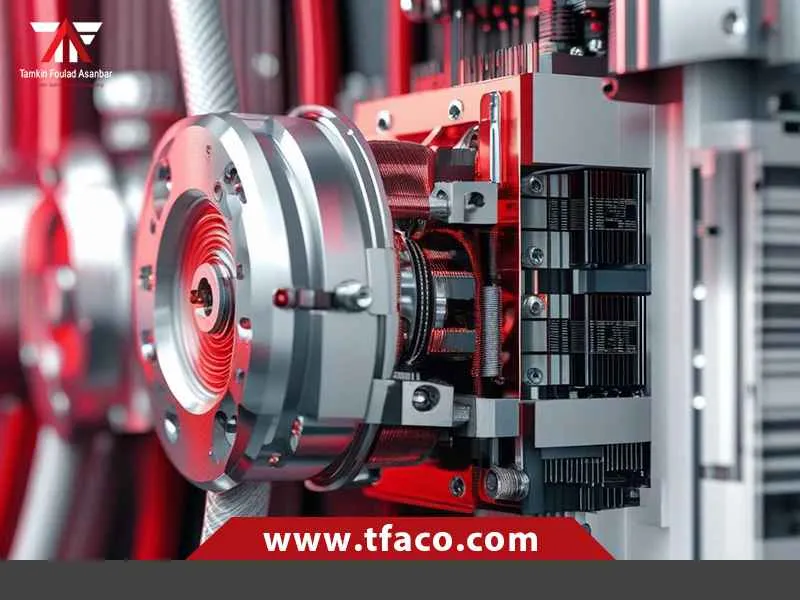
One of the most important developments in modern elevator technology is the widespread adoption of gearless traction motors.
Unlike traditional geared motors, gearless systems eliminate the mechanical gearbox and provide a more direct power transmission mechanism.
| Feature | Geared Motors | Gearless Motors |
|---|---|---|
| Energy efficiency | Generally lower | Generally higher |
| Noise and vibration | More mechanical noise | Quieter operation |
| Installation space | Larger equipment | More compact design |
| Maintenance | More mechanical components | Fewer mechanical components |
| Performance | Suitable for various applications | Excellent for many modern traction systems |
| High-rise applications | Depends on motor design | Widely used in high-rise buildings |
Gearless motors offer several advantages, including improved energy efficiency, reduced mechanical losses, quieter operation, and compact installation requirements.
These features make them particularly suitable for modern residential towers, commercial buildings, and high-rise developments.
Green Technologies and Environmentally Friendly Elevators
Environmental sustainability has become an important priority in the elevator industry.
Manufacturers are increasingly focusing on reducing electricity consumption, minimizing environmental impact, and improving the overall efficiency of elevator systems.
Some of the most important green elevator technologies include:
- Recyclable materials: Using recyclable materials in elevator cabins and components.
- LED lighting: Reducing electricity consumption through energy-efficient lighting.
- Energy-efficient motors: Improving motor performance and reducing power losses.
- Regenerative drives: Recovering energy generated during certain elevator operating conditions and feeding it back into the building’s electrical system.
- Environmental management: Applying environmental management practices such as ISO 14001.
Regenerative drive technology is particularly valuable because it can convert excess mechanical energy into electrical energy, helping reduce the overall energy consumption of elevator systems.
Innovation in Elevator Sales: Combining Technology and Professional Services
Today, elevator sales involve much more than supplying equipment.
Customers increasingly expect customized engineering solutions, professional installation, reliable maintenance, and access to modern technologies.
Leading elevator companies, including Tamkin Foolad Asanbar, focus on providing comprehensive services such as:
- Professional consultation for selecting the right elevator system.
- Supplying elevators equipped with modern technologies.
- Providing energy-efficient motor and control solutions.
- Professional installation and commissioning.
- Technical support and after-sales services.
- Training for building operators and maintenance personnel.
Choosing an experienced elevator company helps ensure that the selected system meets the technical requirements of the building and provides reliable long-term performance.
The Future of the Elevator Industry: Augmented Reality and Robotics
Emerging technologies such as Augmented Reality (AR), robotics, and cloud computing are expected to play an increasingly important role in elevator manufacturing, maintenance, and operation.
Augmented Reality for Maintenance and Repairs
Augmented Reality allows maintenance technicians to access digital information while inspecting physical elevator components.
Using AR-enabled devices, technicians can view technical instructions, component information, and maintenance guidance during repair operations.
This technology can improve inspection accuracy and simplify complex maintenance procedures.
Robotics and Automation
Robotic technologies are being developed to support elevator inspection and maintenance activities.
Robots equipped with sensors and specialized tools can assist technicians in inspecting difficult-to-access areas and identifying potential equipment problems.
Automation can improve maintenance efficiency while reducing the need for personnel to perform certain repetitive inspection tasks.
Cloud Connectivity and Big Data Analytics
Cloud-based platforms allow elevator operating data to be collected, stored, and analyzed.
Combined with advanced analytics and AI, these systems can help maintenance teams identify performance trends and predict potential equipment failures.
The main benefits include:
- Improved predictive maintenance.
- Better performance analysis.
- Centralized equipment monitoring.
- More efficient maintenance scheduling.
- Reduced unexpected downtime.
Summary of New Technologies in the Elevator Industry
| Technology | Main Application | Key Benefit |
|---|---|---|
| Artificial Intelligence (AI) | Intelligent traffic management | Reduced waiting times |
| Internet of Things (IoT) | Real-time equipment monitoring | Predictive maintenance |
| Gearless Motors | Efficient elevator movement | Reduced mechanical losses |
| Green Technologies | Energy-efficient operation | Lower environmental impact |
| Regenerative Drives | Energy recovery | Reduced electricity consumption |
| Augmented Reality (AR) | Maintenance assistance | Improved repair accuracy |
| Robotics | Automated inspection | Increased maintenance efficiency |
| Cloud Computing | Data storage and analysis | Better system management |
How New Technologies Are Transforming Elevator Sales and Manufacturing
In today’s competitive market, elevator manufacturing and sales are increasingly influenced by technological innovation.
Customers are looking for elevator systems that combine safety, energy efficiency, intelligent controls, and reliable after-sales support.
Companies that integrate technologies such as AI, IoT, and gearless motors into their products can provide more advanced solutions for modern construction projects.
Tamkin Foolad Asanbar aims to provide professional elevator solutions by focusing on modern technologies, technical expertise, and comprehensive installation and maintenance services.
Frequently Asked Questions (FAQ)
What are the latest technologies in the elevator industry?
The latest elevator technologies include AI-powered control systems, IoT monitoring, gearless motors, regenerative drives, biometric access control, and predictive maintenance solutions.
How does IoT improve elevator performance?
IoT technology connects elevator components to digital monitoring systems through smart sensors. This enables real-time performance monitoring, early fault detection, and more efficient maintenance planning.
What are the advantages of gearless elevator motors?
Gearless motors offer higher mechanical efficiency, quieter operation, reduced vibration, and a more compact design compared with many traditional geared systems.
What is the role of green technology in elevator manufacturing?
Green technologies help reduce energy consumption and environmental impact through efficient motors, LED lighting, regenerative drives, and recyclable materials.
How does artificial intelligence improve elevator operation?
AI analyzes passenger traffic and operating patterns to optimize elevator dispatching, reduce waiting times, and improve transportation efficiency.
How does Tamkin Foolad Asanbar contribute to elevator technology?
Tamkin Foolad Asanbar provides elevator design, manufacturing, installation, and maintenance services, with a focus on modern technologies and professional engineering solutions.
Conclusion
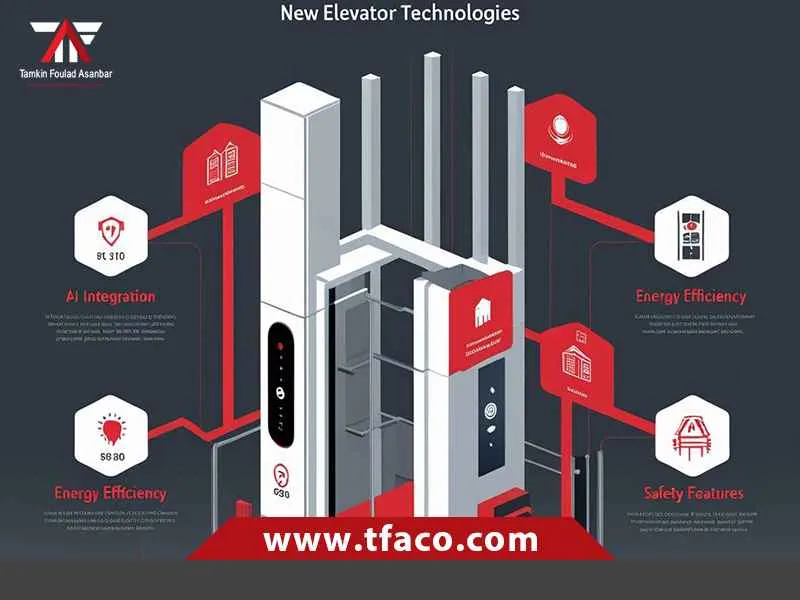
The elevator industry is entering a new era shaped by digital transformation, intelligent automation, energy efficiency, and sustainable engineering.
Technologies such as gearless motors, AI-powered control systems, IoT monitoring, regenerative drives, and augmented reality are transforming elevator performance and maintenance.
These innovations not only improve passenger comfort and safety but also help building owners reduce operating costs and improve long-term efficiency.
Choosing an experienced elevator company is essential to ensuring the successful implementation of these technologies.
Tamkin Foolad Asanbar provides professional elevator solutions designed to meet the requirements of modern residential, commercial, and industrial buildings.
For more information about elevator purchasing, installation, and modern elevator technologies, visit our website or contact our technical team.
Website: www.tfaco.com
Phone: +98 21 2811 1139
Tamkin Foolad Asanbar – Building the Future of Vertical Transportation.